
By Walt Hickey
Welcome to the Numlock Sunday edition.
This week, I spoke to Jude Isabella, over at the newly returned bioGraphic about their new story on the new bees in South America. Here’s what I wrote about it:
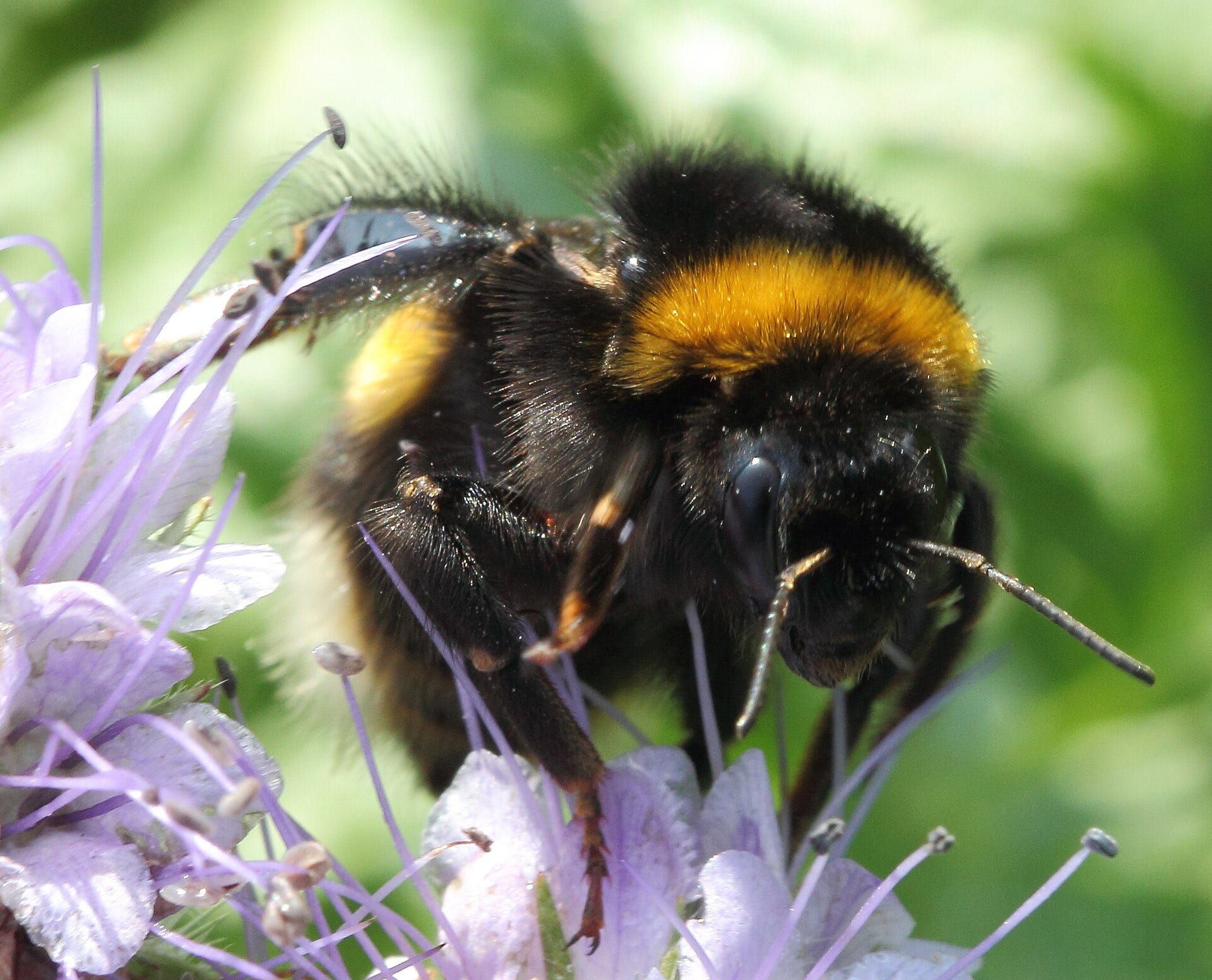
There are about 265 different species of bumblebee in the world, but the introduction of non-native bees can cause serious issues. Non-native bumblebees (Bombus terrestris) are causing serious ecological problems in Chile, where they have caused a significant decline in the population of local pollinators, particularly B. dahlbomii, Patagonia’s only endemic bumblebee, which has seen its population decrease by (per some estimates) 90 percent. Chile approved the adoption of B. terrestris at scale in 1997 as the country attempted to expand its agriculture industry. This affected more than just Chile — neighboring Argentina prohibited the import, but that didn’t matter as Chile’s use of B. terrestris meant that feral colonies have advanced about 200 kilometers into Argentina anyway — and from 1997 to 2022, the country imported 1,633,011 B. terrestris colonies and queens, and producers continue to import tens of thousands of colonies per year.
I’m a huge fan of bioGraphic, which has returned after a summer break and newly independent structure, kicked off by this story about how wild pollinators in Argentina and Chile are suffering from an steady import of non-native species.
Jude has done some great environmental journalism and I’ve been a big fan. You can find Jude over at the new and improved bioGraphic website.
This interview has been condensed and edited.
Jude, thank you so much for coming on.
Well, thanks so much for your interest in having me on.
You are the writer behind a exciting new story called “The Unwilding of Patagonia’s Pollinators.” It is a really fascinating look into an invasive species, into the health of an ecosystem and interesting geopolitical changes in that regard. But it’s also a bit of a return to form for the publication that you are working with called bioGraphic, which I know folks who read this newsletter will recognize as a staple. So it is, either way, just very great to have you back.
Thank you. We’re so excited to be back and really excited to launch with that long-form piece.
Let’s talk about the piece first. You write about a type of bumblebee, and I think that people might not necessarily know just the diversity and ecology of bumblebees, but do you want to speak to how you got turned on to the story, how you found out about this particular insect and what its plight has been?
Yeah, so this came out of a story I did last year called “Plight of the Bumblebees,” and it was based on the research I did into greenhouse pollination in British Columbia, Washington State, Oregon, California. I think a lot of people don’t realize this, but there are some bumblebee species that are domesticated. They have become very important to pollination services for tomato growers, cucumbers, eggplants, any greenhouse crop you’d see in the Pacific Northwest in British Columbia. And the problem is, those bumblebees were not native to the west coast, they’re native to the east coast of North America, and they escaped greenhouses and had an impact on the ecosystem. In researching that, I really dove deep into greenhouse crops and how high-value they are.
They’re actually an industry that has a lot of private equity invested in them, and it’s big. It’s way beyond North America or Europe. These high-value crops are something that the Global South has become deeply invested in, and I found out about the blueberry crop, how absolutely huge the blueberry crop became in places like British Columbia and Washington State and Oregon. But in places like Chile, it ended up being a very big problem in Chile because they took a different bumblebee. North Americans said, “No, we’re not going to use this bumblebee from Europe.” It’s terrestrial, and they imported it by the millions, and it had a very significant impact on Patagonia’s only wild bumblebee.
That’s how I stumbled into this story, looking at this incredibly valuable crop to the world, this superfood cultivated blueberry, and the impact that had on insects, on one particular insect.
Like so many of the stories that bioGraphic does, this was just a really amazing intersection of lots of significant agricultural interests, and these agricultural interests have had a big effect on the local population. But also, you have this industry that is potentially being careless in some ways, or has escalated how it’s taken care of, making sure that these don’t escape.
Let’s meet our two bees here. Do you want to talk a little bit about B. terrestris, and then do you want to talk a little bit about the organism that it’s displacing, the local B. dahlbomii? I’m going to let you handle the pronunciation of that one.
It’s a Patagonian giant bumblebee, it’s about the size of, let’s say, a house key, or a AA battery, it’s pretty big. It was a bee that, 20 years ago, would be easily seen across Patagonia, specifically where I was, Bariloche, which a lot of travelers might be familiar with that lovely city. And you’d be in a meadow not far from the city or and you’d be in the backyard, and you would have these bumblebees pollinating some native flowers that need this bumblebee to pollinate them. Then in the late 1990s, Chile starts importing this European bumblebee, B. terrestris, and using it at first in greenhouses, but bumblebees are better at pollinating blueberries, better than honeybees, and so the blueberry farmers went, “Hey, wait a second, let’s use these bumblebees in the field.”
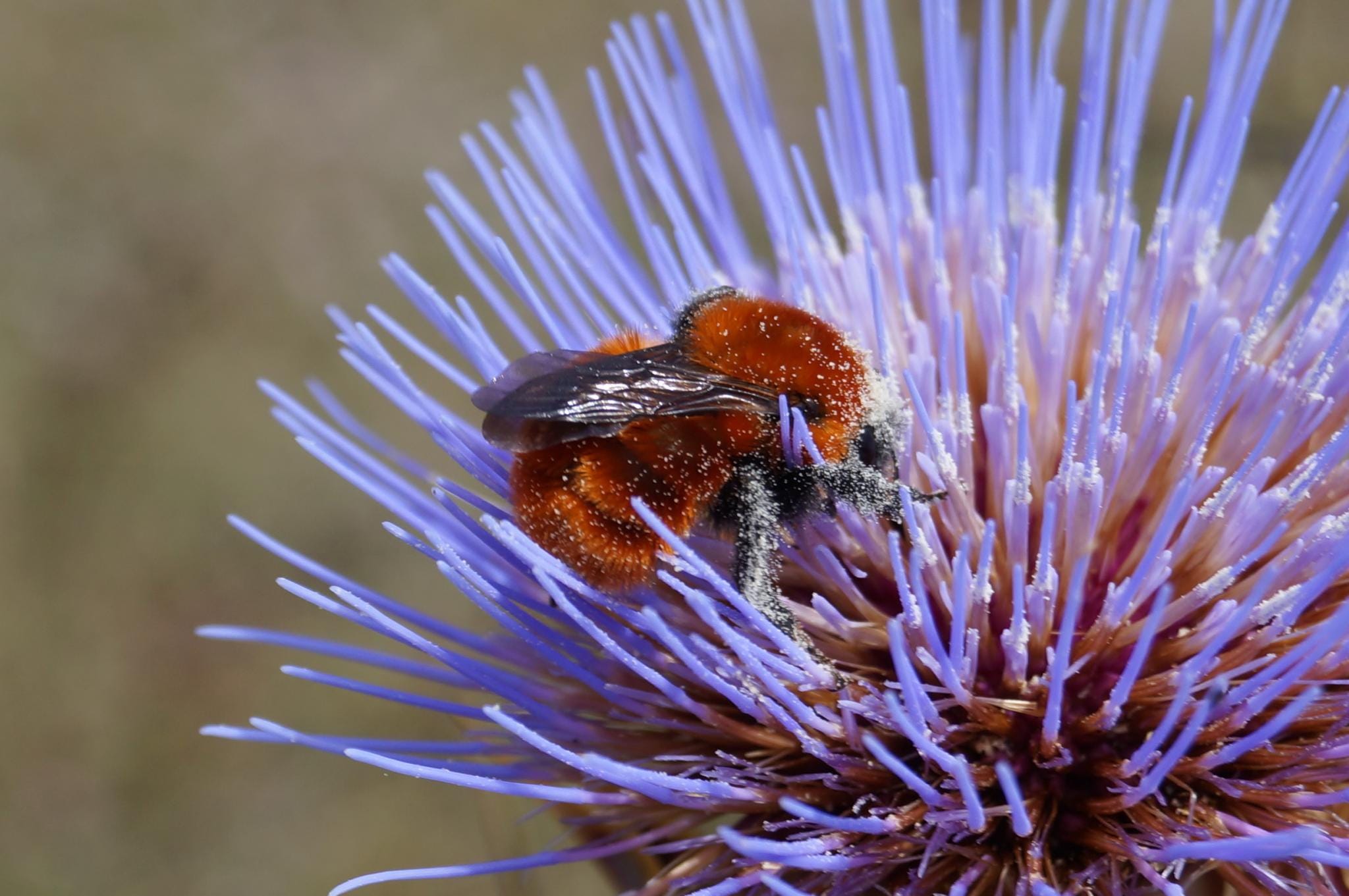


They’re not contained in the greenhouses anymore, not that they would remain in greenhouses, but it would at least slow them down. They were used in fields quite successfully. The blueberry crop in Chile has grown enormously, and they’re generalist bees —, they’re hardy, and they went off as feral colonies all over and displaced the Patagonian giant bumblebee to the point where some researchers believe that the population has dropped by 90 percent. Their existence is in question now, and it’s particularly because of this bumblebee that has displaced them.
I should say there was another bumblebee, which didn’t come up in my article because it was a bit of an aside, that was introduced a little bit earlier, originally from Europe by way of New Zealand, and it too has had an impact, but not nearly what B. terrestris has had.
One thing I love about your story, it was just very thought-provoking, it made me think very hard about what I thought a beehive is. You wrote that from 1997 to 2022, the country of Chile imported something like 1.6 million B. terrestris colonies. Number one, viewing a bee and a beehive and a community of bees as an import that can be counted to a degree of very high specificity rocked me a little bit.
The other element of this was how it almost seemed like some of the issues that they were having was an issue of how does one dispose of a bee colony. If you just release it and then you have these feral colonies, that’s one source of the issue. Do they destroy them or do they just bring them back for winter?
I’m going to go back to my original article with Pacific Northwest and British Columbia.
Please do.
Usually tomato greenhouse farmers are required by legislation, by law, to dispose of the bumblebees at the end of the season. The way they would do that is usually by freezing. So when I talked to a bee biologist while doing that story, she said “I really doubt they’re going about making sure every single colony is being frozen.” And bumblebees don’t have as big a colony as honeybees — maybe a few hundred at the most, although it does depend on the species of bumblebee. And she said to me, “I’m really willing to bet they just get tossed into a dumpster sometimes because nobody is really going around monitoring them.:
In Chile, I don’t think there is legislation there. It was hard to figure some of this stuff out, and it was a good thing I had an Argentinian journalist along with me doing some of the research, but there doesn’t seem to be a requirement to actually euthanize these bees. Imagine a cardboard banker’s box. That is one hive, which might have a few hundred workers in it. And the farmers buy these boxes, maybe 30 bucks a pop, and they just leave them, and nobody comes and collects them. Honeybees are actually very managed. Somebody brings their honeybees to a field, manages it, comes back and gets them.
But bumblebees can just be left. What happens is, the queens will go off and hibernate for winter. Then they’ll emerge and start a whole new colony. It’s very easy to create these feral colonies if you don’t bother. Usually you freeze the bees at the end of the season so that they don’t escape.
Many countries put a lot of thought into keeping out wildlife that is not necessarily native. And it just seems wild that you can essentially order 30 boxes of bumblebees for 30 bucks a pop, and nobody’s going to check in on that. It seems almost like a waste issue as much as it is an ecology issue.
It is. It’s absolutely bizarre. Here in British Columbia, I can actually order a bumblebee hive if I wanted. And nobody cares if I get them and release them in my yard, right? I think it’s part of the whole thing we have about insects.
That’s why we call the article, to a certain extent, what we did: “The Unwilding of Patagonia’s Pollinators.” When you think of Patagonia, you think of the wild, you think of jaguars, you think of these huge efforts by conservation organizations to bring Patagonia back to some path. But what? If you get rid of, if you unwild your pollinators, you’re basically unwilding the entire ecosystem. And people don’t realize that, because these animals are animals. They’re very small, and they are treated like livestock. Yes.
This livestock is not in any way monitored the way we might monitor sheep or cattle or some other domesticated species. And it’s not just Chile, it’s not just South America, it’s also North America.
You had a really interesting statistic in your piece that I would love to hear a little bit about. Obviously, pollinators are very, very crucial for some crops in particular, but you covered a little bit of the scholarship on potentially revising the ideas of how crucial they are for all crops potentially how important they might be. Like, you don’t need them for certain things. I’d love to hear a little bit about that debate because I wasn’t actually aware of this controversy.
Yeah. That’s interesting. When we talk about the pollinator crisis, I think most people don’t understand what the pollination crisis really is. It’s the fact that we rely way too much on honeybees. There’s way too many honeybees in the world. There’s way too many hobbyist honeybees. Now we have this other layer of domesticated pollinators, which is bumblebees, which began in the 1980s. And they’re really good for these high value crops like tomatoes, berries, eggplant, cucumbers, nuts, avocados, stuff like that.
So they become very important as that crop has become very important, mostly to wealthier countries who like the nutritional punch of these super foods. But if you look at, in terms of feeding the world — staple crops, generally speaking, rely on wind pollination. And this idea that without pollinators, humanity would starve in four years — and it’s something I found on university websites that have bee programs, a quote attributed to Albert Einstein, which he never said — is basically not true.
One of the researchers I talked to, Marcelo Aizen, told me that he had been working with a German researcher who also started questioning this whole idea of, “Okay, what exactly do we need pollination-wise?” And yes, we do need honey bees. Yes, we do need bumblebees. And yes, absolutely, we need wild pollinators. Without wild pollinators, you’re relying a lot on these domesticated species, which are, generally speaking, one species and you can easily wipe them out. You need diversity. You need a biological, diverse portfolio when it comes to wild pollinators, or pollinators in general.
You need to have a food system that is resilient, and understand that there are crops that rely on all sorts of pollination. Only like 30 percent rely on bees. That’s not all our food. And some plants rely more on insect pollination than others, even within the fruit and vegetable ecosystem. Like pumpkin, let’s say, versus some other nut or squash, right? When we say one third of every bite of our food comes from somewhere we can find a pollinator for, that really depends on what that bite is. Some of the appeal of rice and potatoes was that they just do their own thing, and you don’t need a bee to do it. You can grow them anyway.
There was this really interesting line that you had in here that was essentially saying that we are making the pollinators into a monocrop themselves. It’s like when the Gros Michel banana got wiped out by a plague, and then we had to find an entirely new type of banana. If we do that with B. terrestris, we are putting all of our berries in one basket.
Exactly. It’s very worrisome. And we do things, I mentioned this in the article, when we worry about production dipping, not being able to produce as much as we think, we put more land under kill. And that has a big impact on the wild pollinators that actually undergirds this ecosystem. I’ve written a lot about famine as well and it’s the same thing. You want a diverse portfolio when it comes to species.
Brilliant. This actually ties in really well with the relaunch of bioGraphic, which, again, is a publication that really hones in on biodiversity as a really crucial element of both a healthy environment as well as a broader world.
Do you want to speak a little bit about this story and its role in bioGraphic and where things stand with y’all? I’m a big fan of what you guys are doing over there.
Thanks so much. We took a publishing pause over the summer to organize ourselves after our program was cut by the California Academy of Sciences because they have their own financial problems and it was time for us, after 10 years, to move off on our own. So we took the time in the summer to become our own nonprofit society. We’re on our way to becoming a 501(c)(3), a charity.
We spent the summer developing a new website. Website development takes time and we wanted something that really worked well on mobile and all that stuff. Our site looks fantastic, but the architecture was a bit old. We needed to update. We had time to do that. And that gave us time to get that big feature ready to anchor our launch on September 15. And I should say that piece was a collaboration between us, the Food Environmental Reporting Network and the Paper of Records in Argentina. And it was funded by the Pulitzer center.
At least in bioGraphic, what we’re looking for in the future is more collaborations like that to be able to bring these big immersive features to a variety of audiences. That feature was also published in Spanish for the Argentinian audience. And we hope that has a big impact on policy in Chile and Argentina.
Yes, that is our beat, marine and terrestrial. We are pretty much the only publication whose sole focus is in terms of environmental journalism. And we’re just so delighted to be back, to be on our own. We also launched our first reader donation campaign, and we have lots of time left. People are coming out to support us, we’re getting lots of attention, lots of great feedback and donations, which is fantastic.
In journalism, the road right now is a little bumpy, but all of us at bioGraphic are really excited and we’re feeling really positive about our role in the science journalism ecosystem, and drawing attention to a huge crisis that often gets overlooked because of things like climate change and political geopolitical situation right now and all that.
But it is a huge crisis we are in right now. And people, we can make a difference. People can make a difference. Government policies can make a difference. And it’s not too late to change how we go about treating the natural world. I think that Bumblebee piece really shows that it’s really just a matter of policy that would help categorize giant Bumblebee.
It’s so exciting to see complex issues that have addressable solutions. You’re not going to solve everything at once, but I’ve always appreciated how bioGraphic does a very good job of highlighting some straightforward things that can be done on this stuff. It’s always nice to get a bit of hope at the end of the piece. Thank you so much for coming on. I really appreciate your time.
Thank you. I really appreciate it. Thanks for reaching out.
It’s great to chat about this and I’m still on the bumblebee beat, just to let you know.
Check out bioGraphic and, if you want to support them, kick in over here.