
By Walt Hickey
Welcome to the Numlock Sunday edition.
This week, I spoke to my good friend Manny Fidel, host extraordinaire of the podcast NO SUCH THING. Manny has become a Numlock regular, and I wanted to bring him back again now that he’s about to publish his up-and-coming book, Colored People Time: A Case for Casual Rebellion.
The book is an insightful and page-turning collection of essays contemplating time, how time feels different at different moments in our lives, in different places, between different people. It’s a really delightful book and I enjoyed it a whole lot. We spoke about race, politics, video games and life experiences, all wrapped around the concept of time.
The book is available wherever books are sold, and if you don’t already, do follow Manny’s great podcast, NO SUCH THING.
This interview has been condensed and edited.
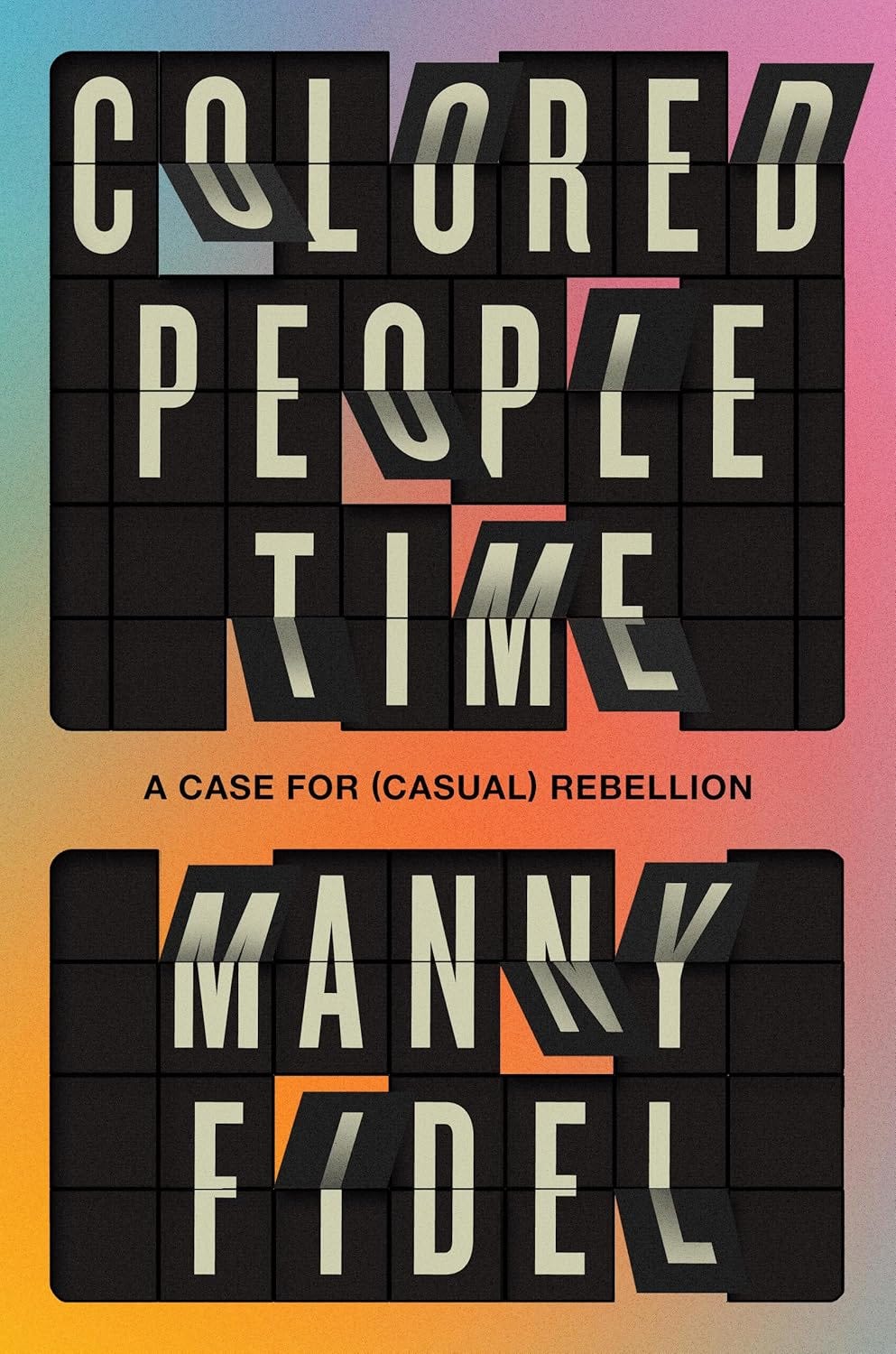
Manny, you are one of the hosts of the hit podcast, No Such Thing, and you are the author of the brand new book, Colored People Time: A Case for Casual Rebellion. I’m such a fan of your work. I can’t wait to talk a little bit about the book. How’s it going?
Things are going well. As you know, I just had a kid recently. She’s only two months old now, but she’s completely changed my life in all the best ways. The podcast is going great. We’re growing and growing. And now, this book is out; Colored People Time is out. It’s a very busy time to have just had a kid, but we’re rolling with it.
I’m very impressed. You’ve been working on this book for a while. I know that you’ve been thinking about it for a few years, I know that you’ve actually been working on writing and production of it for a bit. Do you want to take me back a little bit to the beginning of what got you interested in writing this book in particular?
Honestly, the idea about writing a book, not necessarily this one, came to me during peak COVID, where we were just locked in our apartments by ourselves for hours and hours. I was thinking about ways to do things that would be creatively fulfilling, and I thought a book could be good because I’m just sitting around all day. It feels like the thing I could put some effort into. It took a while before the book actually transformed into the concept that it is today.
I think it’s really interesting that a book that is in many ways about the nature of time (how it is a little bit more subjective than I think people give it credit for) came around during COVID, which is when everybody had a very different relationship with time.
Yeah, during COVID, there was an elongation of time in some aspects. But in other aspects, there was a real condensing of time. Sometimes I’ll think about things that happened during COVID, and I’ll be like, “Wow, that feels like 10 years ago.” Or I’ll think about something that happened during COVID, and I’ll be like, “That feels like it was yesterday.”
We changed our lives so much, at least in bigger metropolitan cities like New York. Our daily routines changed so much that it affected our perception of time. That was a real influencing factor for me writing the book.
What did the book become? How would you describe the book?
Colored People Time is a collection of hopefully comical essays about race, about politics and about the concept of time in general. Time and the perception of time is the thread throughout all of these chapters. Every chapter is about something completely different, but that theme is in there. The essays are, in some cases, very personal essays about my life. In other cases, they’re analyses of things that happen in pop culture.
I really wanted to write a book that was really easily consumable. I mean, you can read this in probably two hours, if that. The concept of time has just been something I’ve been thinking about ever since I became sentient. The way it wraps around different people, how people relate to it differently. This book is kind of a collection of those ideas jotted down on paper.
I know we are talking at the end of March, and this is a very interesting liminal period between winter and the spring. Time just does feel different in different seasons. You have an essay in the book, “Summer 16.” Do you want to talk a little bit about, how seasonality and different places and times can actually change your perception of stuff?
Yeah, definitely. “Summer 16” is about, as you can surmise, the summer of 2016 and also about this collective desire to go back to that summer. I don’t know if you’ve seen this online or on social media. There are just tons and tons of people who romanticize about that summer specifically and want to go back to it. Even years ago, I was interested in why that is. What is it about that summer specifically that everyone longed for so, so greatly? I did some thinking, and I made this argument that, especially for people of color, that summer was the summer right before the first Trump administration came to power.
We were the people, it’s like spokespeople for, like, racial justice in America, in the workplace, or in social, in our social lives. It felt like a turning point for people of color, especially millennials of color. Not to say that racism didn’t exist before that summer, but I have an inkling that that’s actually why we want to go back. It feels like a moment in time where we were a little bit more carefree.
Yeah, just hearing you talk about it, it’s like that Hunter Thompson “the wave” speech. That was the high water mark, and then the waters receded.
The book is titled Colored People Time, but I don’t want that to scare anyone. This idea of that summer being something that people long for is actually a broad idea. I have tons of white friends who also feel that way. I think some of the things that happened right after that summer, specifically, like the Trump administration coming to power, still apply to other white people as well.
That’s still, that’s still a moment of bleakness, no matter what color you are.
I do want to dive a little bit, if you don’t mind, into the title of it. It’s provocative, how did you arrive at it? How does it resemble what’s in the book? You’ve written very, very engagingly about race before, I’m intrigued as to how it comes to where this book is coming from.
The title is pretty much this tongue-in-cheek thing that I decided to use as the title for the book. I had other titles in mind that had to do with time, but “colored people time” — for people who might not know, but I think it’s a pretty widely understood concept at this point — is this idea that people of color are going to be late to whatever event that they’re invited to. I’ve been struck by this concept because it’s a stereotype, but also something that is widely accepted and embraced by people of color. So, I thought that “colored people time” being technically a negative stereotype, but also something that people willingly embrace, was just a beautiful idea to me. And I chose that for the title of the book.
But like I said earlier, don’t be thrown off by the title. This book is for everyone. I write about video games; I write about sports; I write about movies. Because it’s through the lens of my personal life, you do get some of the you get race in there, you get politics in there. But this is a book for everyone.
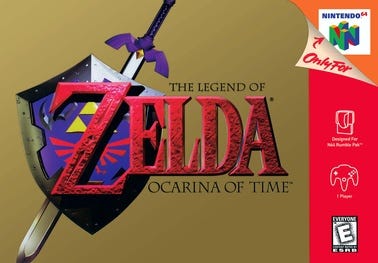
You mentioned video games, there’s a chapter of the book related to “Ocarina of Time.” How do you write about such a unique and first-person experience? What does “Ocarina of Time” mean to you?
Yeah, so “Ocarina of Time” is not the titular essay, but it is my favorite essay of the book.
Basically, the idea is that it’s a creative writing exercise for me. In “Ocarina of Time,” I’m sure you’re aware of the gameplay mechanic where you go back and forth in time by seven years. The things that you do in the past affect the future; that’s obvious. But you also go to the future and do some things, and then you can go back to the past and things have changed because of those decisions you made. I just thought that that was such an interesting gameplay mechanic, so much so that I wanted to do this thought experiment about what it would be like to have that in my own life.
I write about a specific moment when I was a kid, where I almost drowned in this lake in Ohio during this summer camp trip. I thought, “What would it be like if I had that gameplay mechanic right then in that moment and was able to just zap myself into the future by X amount of years? What would the two worlds, the past and the future, how would they look different based on my decision to do that?” That chapter is so fun. It’s about my fear of big bodies of water, my fear of dying in general and it’s so fun that it’s wrapped up in “Ocarina of Time” as a concept.
When you’re a kid, you don’t really have a full grasp on time. Obviously, when you started off as a baby, and I’m sure that you can speak to this from personal experience, time is somewhat immaterial to the flow of your life. Even as you grow up a bit, you’re bound in some ways by obligations like school. But summer feels different when you are 10 than when you are older.
There’s a before and an after life when all of a sudden, time is no longer just a fairly unlimited thing. It’s a realization that you oftentimes have at the age when you and I played “Ocarina of Time.”
Yeah, exactly. I played that game when I was around 10 years old, and I’ve played it a couple of times since then. And even just my relationship to that game changes based on how old I was when I played it. When I was 10 years old playing it, I was full of wonder and curiosity. It was relatively new at the time, so the graphics looked incredible to me. I never thought that they would surpass Nintendo 64 graphics. When I play it as an adult, so many of the themes of the games completely change for me, too. There are some more adult, darker themes that you don’t pick up on when you’re a kid.
To get to what you were saying about the relativity of time, that’s still so mind-blowing to me. And in some ways, I wish I had written this book after I had a kid. I officially wrapped up the manuscript last year when my wife was pregnant, but we didn’t know what the name of the baby was going to be yet. On the first page, there’s the dedication “to my newborn baby girl.” Now I wish I could put her name in there.
Having a kid made me feel like I had gone into this new realm of time. I’m 34, and I felt like when I had her, I entered into this new stratosphere of way of thinking. I felt like, “Okay, I’m 34. I’m feeling a little bit old. I’m feeling like I’m aging.” But now that I have this little baby here, I just feel completely young again. Had this happened before I wrote the book, I could have probably done a whole chapter about this.
What you’re describing is an excellent pitch for a sequel.
The book is Colored People Time. It’s available wherever books are sold. It’s very, very good. I want to talk a little bit about this, before we wrap up: the subtitle of the book, which is “A Case for Casual Rebellion.” What is your call to action here?
It’s basically about just taking ownership of the way time flows around you. The subtitle comes from one of the essays, which is a sarcastic argument that until race relations or racial injustice fixes itself, people of color should be able to be late to things. Legislatively, I argue that the Supreme Court should make this a law. The casual rebellion is like, “All right, you’re going to fight against the strictness, the stringiness of time in the little ways that you can.” And that’s why it’s casual.
A little bit of a quid pro quo, if we are going to continue having a white-dominated society, we should have a couple of perks for folks who are not from the majority community.
Yeah, exactly. If this law were to be enacted, basically, the effect would be that if I’m late to the new Mission Impossible movie, that screening is not going to start until I get there. Or if I’m trying to get to the airport to get a flight, the flight doesn’t take off until I arrive. These are really small tongue-in-cheek, sarcastic ways to make up for the disparity of justice we have in our society now.
Is there any other essay that you have a particular fondness for in the book?
For the partiers out there, one of the chapters is about my own personal addiction to staying out late at night, like not knowing when to go home. I feel like I’ve become that meme where it’s like the friend is asking at 5 a.m. what the next move is.
There’s a chapter in there called “The Sunrise Uber,” and it’s just about how often I found myself being in Ubers back home during sunrise and meditating on why that is. I think that’s a fun one that people enjoy.
As a fellow “Sunrise Uber” guy, I could not agree more. I’m just so excited for the book. I’m so excited for you. This is a very good time. Obviously, again, we’re huge fans of your podcast over here. But why don’t you tell people a little bit about the book, where they can find it, where they can find you?
This book is a collection of 10 essays, very short. You can take this to the beach and read it in about 90 minutes to two hours. It’s a great gift for someone. It can be like a cool coffee table book. It’s just a collection of essays about the concept of time, how it wraps around us, how we perceive it and how it’s totally relative, depending on who you are.
You can find the book at your local bookstore, or wherever books are sold. But also, if you are someone who is an audiobook listener, there’s going to be an audiobook version coming out at launch, and there’s also going to be an ebook version. You can find that you can find those wherever books are sold.
You recorded the audiobook version, right?
I did record the audiobook. It was a really funny experience. I felt like I was already a professional yapper, so to speak, and thought that this was going to be such a breeze. They were talking about doing it over three eight-hour sessions. And I was like, “No, no, no, no, I’m going to knock this out in two hours.” I cannot tell you how wrong I was. It was such an exhaustive process, but it was a lot of fun.
People would be good to check out any of those versions.
Yeah. You should definitely check out the audiobook version because I destroyed my throat for that.
Thanks again for coming on, man. I really appreciate it. And folks should definitely check out the book.
Yeah, absolutely. Thanks for having me.
Edited by Crystal Wang
If you have anything you’d like to see in this Sunday special, shoot me an email. Comment below! Thanks for reading, and thanks so much for supporting Numlock.
Thank you so much for becoming a paid subscriber!
Send links to me on Twitter at @WaltHickey or email me with numbers, tips or feedback at walt@numlock.news.

Wait until Manny’s daughter is old enough to want long bedtime reading sessions. I never knew reading could be so laborious! Book looks fun; I’ll definitely check it out