
By Walt Hickey
Welcome to the Numlock Sunday edition.
This week, I spoke to the comics creator Punko at New York Comic Con!
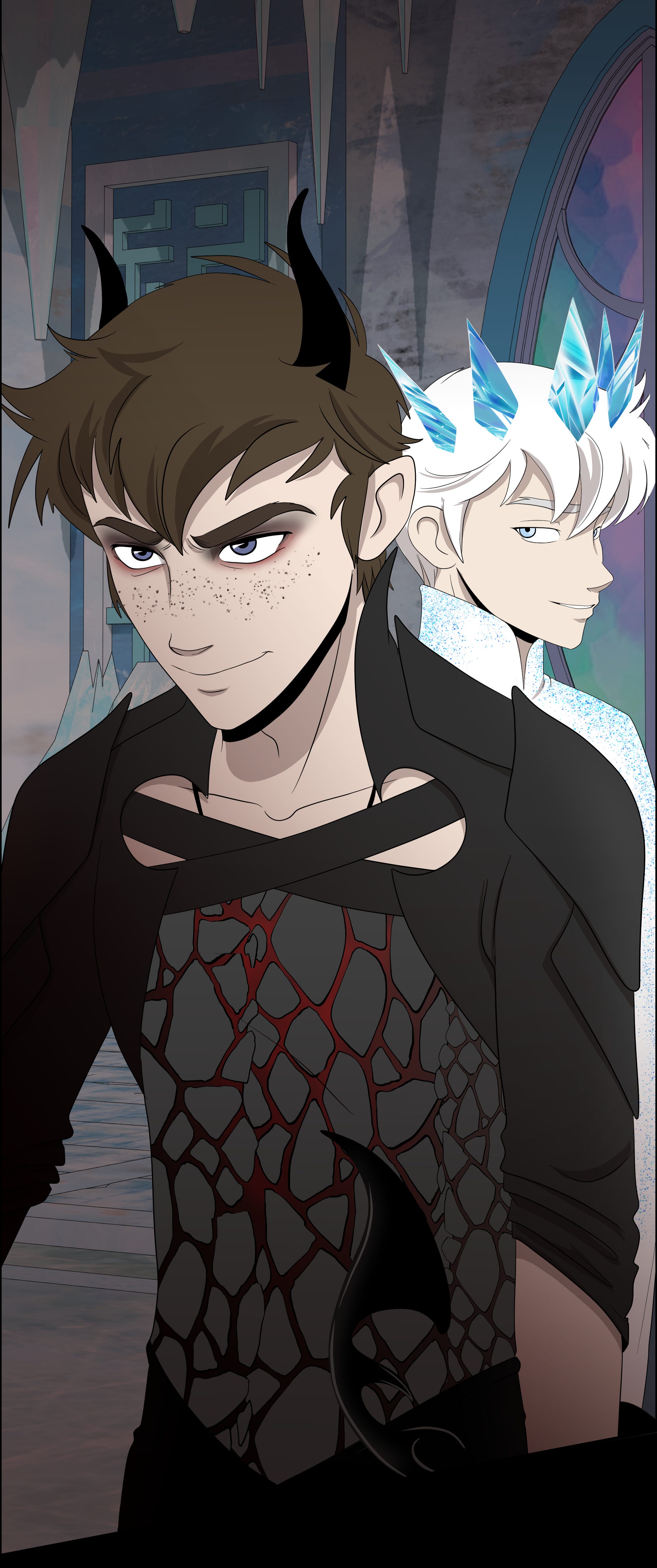
She is the creator of the horror comic Stagtown and the ongoing (and personal favorite) fantasy webtoon Cinderella Boy.
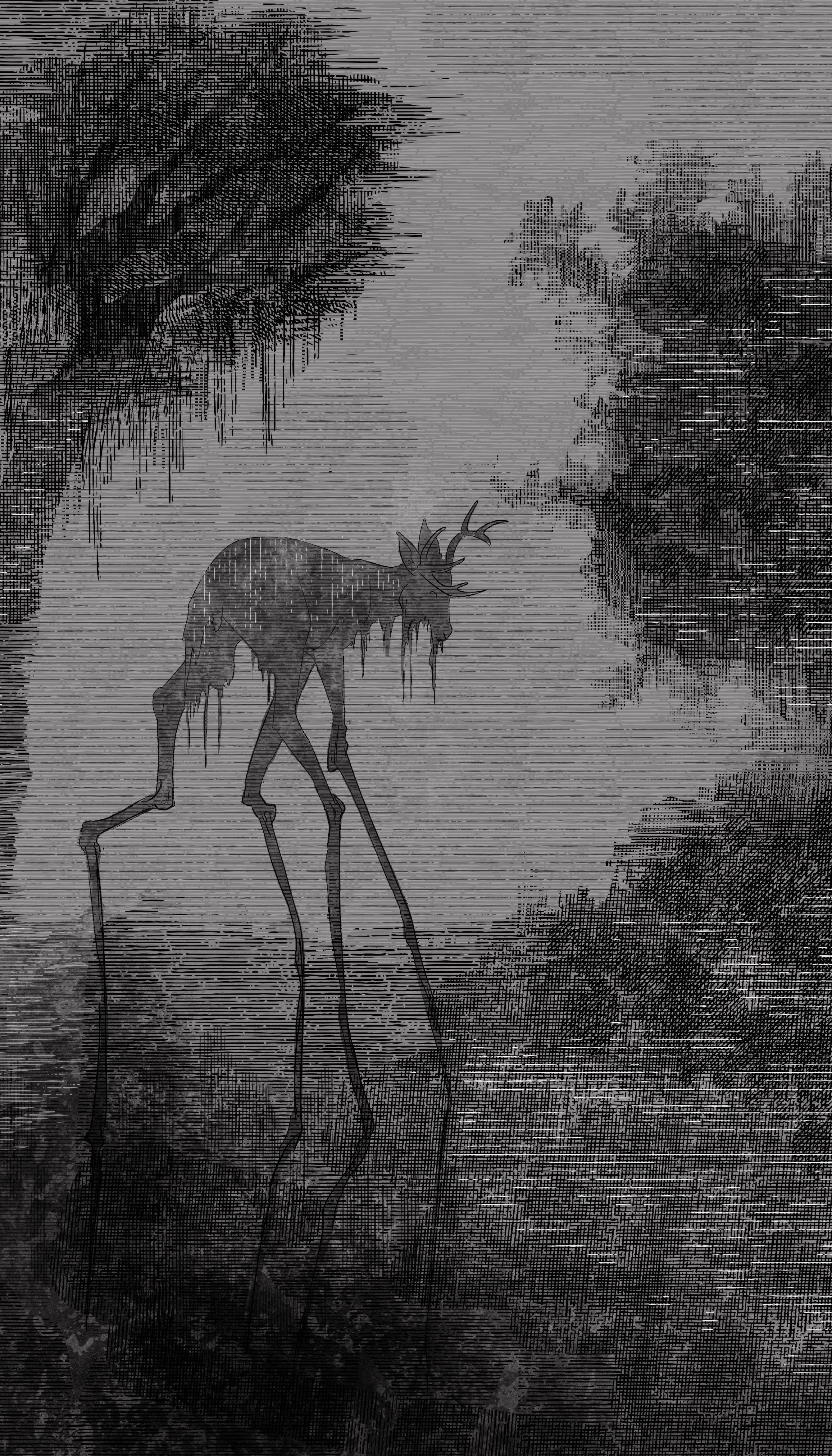
Stagtown is a psychological mystery horror comic that’s a perfect read for spooky season, I would describe it as Junji Ito-meets-X Files paranoia-infused webtoon; Cinderella Boy is the smash-hit high concept romance comic with some particularly visually striking fantasy elements, and I contend is one of the best ongoing reads right now. This week was especially exciting for Punko with the release of the first print volume of Stagtown: Volume One.
Punko was one of the early birds when it came to vertically-scrolling comics, she’s super insightful about the how the medium of comics is evolving and where audiences are now looking, and given the book adaptations of her webtoon and the in-development film adaptation of Stagtown by Margot Robbie’s production company.
You can find Stagtown: Volume One anywhere that books are sold and other you can go to WEBTOON for all of Punko’s works, including Cinderella Boy.
This interview has been condensed and edited.
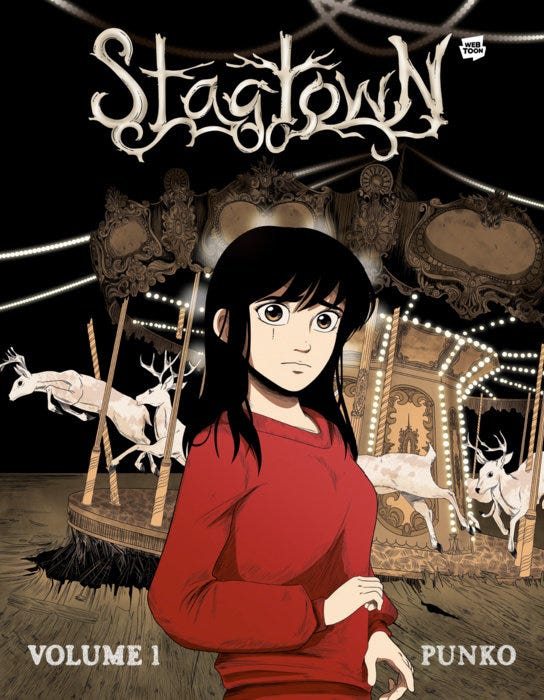
First up, congratulations about Stagtown. I took a look at it downstairs, it looks really, really great. How does it feel?
About six pounds, this weighs a lot. No, it’s really great, it’s nice to finally have a print project out since I haven’t actually done anything in print since like 2017, 2018. So that was really fun to have a big box of books mailed to me and be like, “Oh hey look, my books, this is terrific, I’m going to somehow get them up the stairs and into my house.” They weigh a ton, I don’t know if you picked up that book, but it weighs about a thousand pounds.
Oh yeah, a lot of color in that. We’ll talk a little bit about the new book and all that stuff shortly, but I do want to take a little bit of a step back for folks who are either unfamiliar with your work or just don’t know the entire run of your career.
You’ve had a really interesting time with comics, you’ve obviously been working a lot with WEBTOON lately. Do you want to talk a little bit about your work and what you do now, and the various different ways that you’ve found a way to find an audience online?
It’s funny you should say that because we were just coming down here and I was saying to some of the other people I work with at Webtoon. They were saying something about working at the convention and I said, “Well if it were me, I would design the booth like this. But that’s because I used to work as a prop designer for haunted houses.” And they said, “You have had every job on earth. And what other jobs have you had?”
I was like, every job, every job, like character entertainer. I worked at an assembly line making jewelry, I sewed costumes for children’s theater, I did all this stuff. And every single job that I had ended up paying off for comics. It’s been a long career that started in comics and then was punctuated by the times when I needed all these second and third jobs just to get by in comics. I would take any work that I could do, which usually meant building or sewing or designing things and rolled all of those skills that I learned back into my comic work. And so that was really exciting.
I started off with Bizengast in 2005. It was right after college. And if you want to start more technically, I started out getting a degree in comics from Savannah College of Art and Design. We call it sequential art because it sounds fancier on a diploma than comic books.
Oh, certainly.
Yeah. I’m like, wow, sequential art, what’s that? It’s comic books.
But yeah, we did eight volumes of Bizengast. That ran until 2012. And then I got an awful lot of different jobs, like I said, like working for haunted houses. I worked as a toy designer for a toy company but kept working on comics on the side. I self-published a comic called The Elephant Book. I then worked for Action Lab Entertainment and then started to work for Webtoon. So it’s been like a really long career of various weird things.
It’s 20 years of being physically published this year. I think the first volume of Bizengast actually came out in 2006. I can’t remember if it was so long ago, but it was just about 20 years. It’s interesting to know, back in the day we were still drawing on paper and then scanning our pages in on these big massive 11 by 17 scanners. And now I can just bring my tablet with me. I’m just on the ferry over from Port Imperial working on a panel, which is like, this is crazy. Back in the day, I would have just brought a big piece of paper with me and drawn on the ferry.
The production has changed, but so has the audience interaction. Again, you have a very good Discord community, Patreon, obviously the Webtoon fan. You can monetize this through Patreon subscriptions or Webtoon coins, but also now print. It seems like you’ve had irons in a lot of different fires. I’m just curious as to how your experience creating these comics has changed over time.
I’ll tell you, it’s nice. It’s really great to have the internet and have actual live feedback from fans. Because here’s the thing: right up until the end of when Bizengast ran, I didn’t know that anybody actually read it. We didn’t really have social media back in like 2008. So you either had to go on my website and send me an email or I just didn’t know you were reading it.
I didn’t look at the Bookscan numbers. I just wrote my comic and got my checks. So when I would run into people at cons years later who said, “Oh, yeah, Bizengast.” I would say, “How have you heard of that? I thought only I knew about that.” And they’re like, “No. Lots of people know about it.” I’m like, “They do? Who?” And they’re like, “Lots of people?” I’m like, “Oh, well, good for them. They’re diligent. They found my dumb little comic.”
And they’re like, “It was in Barnes & Noble.”
There’s a lot of things in Barnes & Noble!
Yeah, there’s a lot of things in Barnes & Noble. There’s little puzzles and things. But until I started going to cons and everything, I never really bumped into fans. Unless they sent me an email, I never really knew that they liked it.
And now that we have Webtoon, I can actually hear from people pretty much the minute the episode comes out, which is terrific. I love staying up and chatting with people in my Discord when the episode comes out, finding out what they liked, what they didn’t like, what they’re interested in seeing more of. And it’s great having that feedback where you can really know what your audience wants.
Back in the day in print comics, if you work on a graphic novel for nine months and then wonder if the audience likes it, you’re basically just guessing. You have no idea. And if you go in a certain direction halfway through the graphic novel that your audience is really not going to be that interested in, you’re not going to hear about it until, like, next year. And so it was a long delay and no real-time feedback except from editors. It’s just great to hear from the community immediately and to know what it is that they’re interested in and what resonates with them.
It seems like that’s also been throughout comics history. You have the letters page in the monthly floppy. This is a medium that really thrives, it seems, on direct fan engagement.
It is. It’s really great to have that sense of community, to not just read a comic by yourself in your room and then be like, “Well, I don’t know if anybody else reads this. I guess maybe I could ask somebody at school, but maybe not.” No, you have a whole built-in community right there. You’re not just little tiny Punko back in the ’90s sitting at her local comic book store after class and reading books by herself.
I guess the next question is how do you find an audience now? How has Webtoon changed some of the math on that? I’d be interested in your point of view, because, again, I think that you’ve been rather savvy when it comes to genre. You have horror comics, and horror is really good at racking up an established reader base on a new thing. And then, obviously, Cinderella Boy is a bit of a shift from that, but romantic comedy is doing very well in the comics medium, even if in other places it isn’t.
So I’m just curious, how do you develop this audience? How has Webtoon changed some of where you can sit?
I have always lived by the rule that I am an enormous, unrepentant nerd. I am a huge fan of things, and I am in fandoms. I do my little fan drawings and my fanfictions and my everything all across the years. So I write a story that I like, and I know because I have so many similarities with the people in my audience, I’m going to just find people who will like it, too. It’s hard to describe. It’s “Do you like Gravity Falls? I love Gravity Falls. We should do a story that has a vibe like that.”
I think I find an audience naturally because I’m such a huge fan and a part of various fandoms that we just all have certain vibes that we mesh with, and we group together naturally around certain themes. I don’t really go out and say, “Okay, I’m going to find an audience for this, I’m going to find an audience for that.” I write what I like, and then I just trust that the audience will find me. I’ve been lucky enough that there are enough like-minded fans out there who just see my thing and say, “Yeah, I know what you’re going for. I’m going to go ahead and invest my time in this.”
I want to talk a little bit about the new book. What was it like adapting it?
Again, you see a lot these days of people who have books in the more traditional full page-sized comics, desperately trying to get these things adapted into scrolling vertical webtoon format. I’m interested in your experience doing a bit of the reverse. You were rather early to the scrolling element, but that is still an interesting challenge to adapt into a more physical book form.
I was actually just talking to an old publisher. They were asking whether it was feasible for them to adapt some of their back catalog to try and put it on something like Canvas. And they said, “How do you do that? How do you line up panels?” And I said, “You’ve got to think completely differently.”
You have to think in terms of one panel after another panel after another panel. When we worked in print back in the day, you imagine the whole page at once, and that’s five to seven panels right there, unless it’s a splash page. So, you just have a vision of what the whole page looks like. And I was like, “You’ve got to think panel by panel now.”
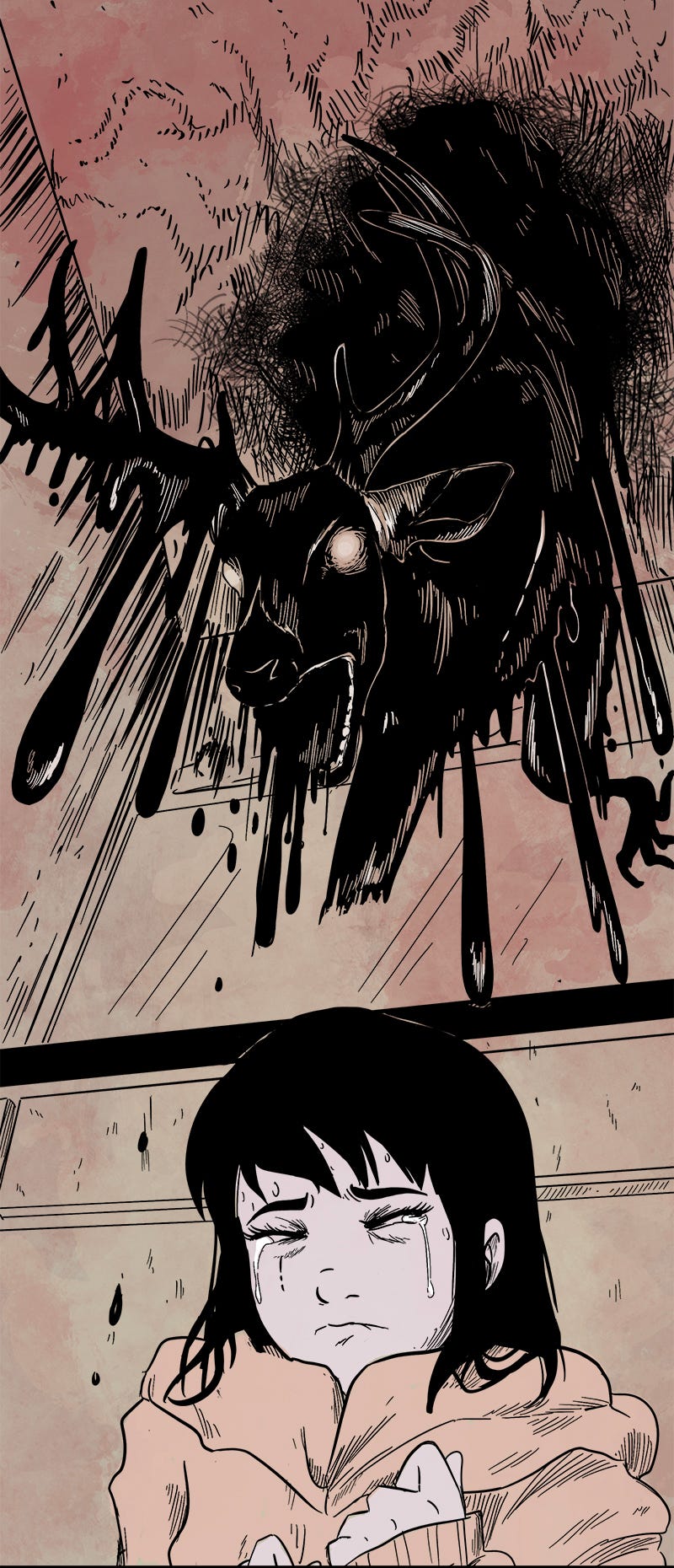
It is so much more freeing in a way. But a pain in the neck to have to unscroll it and put it back into book form. When we were doing the Stagtown book, and I know we were joking how heavy it was, it was almost much bigger. We ended up having to cut it down. We didn’t remove any content, but we had to find a way to fit it all into a book without it being like 500 pages long. And it’s still an absolute beast of a book.
But it was difficult. The people at Ten Speed are pros, I think, at unscrolling comics now because they’ve worked on different ones. They’ve worked on Castle Swimmer and a bunch of other titles. They already had some experience doing this. I can’t imagine what it was like when they had to do their first one. That must have been a nightmare.
Totally. So much of your work, and I think also a lot of the scrolling style, is that timing is built into it in a way that I think also really works in horror. But you have to unscroll that a bit for a book.
Exactly. I think they did a really good job of handling things that were timed to take advantage of the scroll. I do love taking advantage of the scroll for horror. You can control the read speed of your audience in a way that you could not do with pages. Once you flip the page, there’s the big reveal. You’ve already seen the big reveal on the next page. But in this, you can go panel by panel and really up the anxiety.
But it was hard to do it in a book. I think that Penguin Random House did a great job on it
I would be lying if I didn’t say that now that I’m working on Cinderella Boy, I am taking eventual print options into mind when I do the panels, and I’m like, “Okay, let’s not do a long scrolling panel right here because that’s not going to look good in the book.” Let’s just format it so that this will be able to more easily jigsaw into a book later.
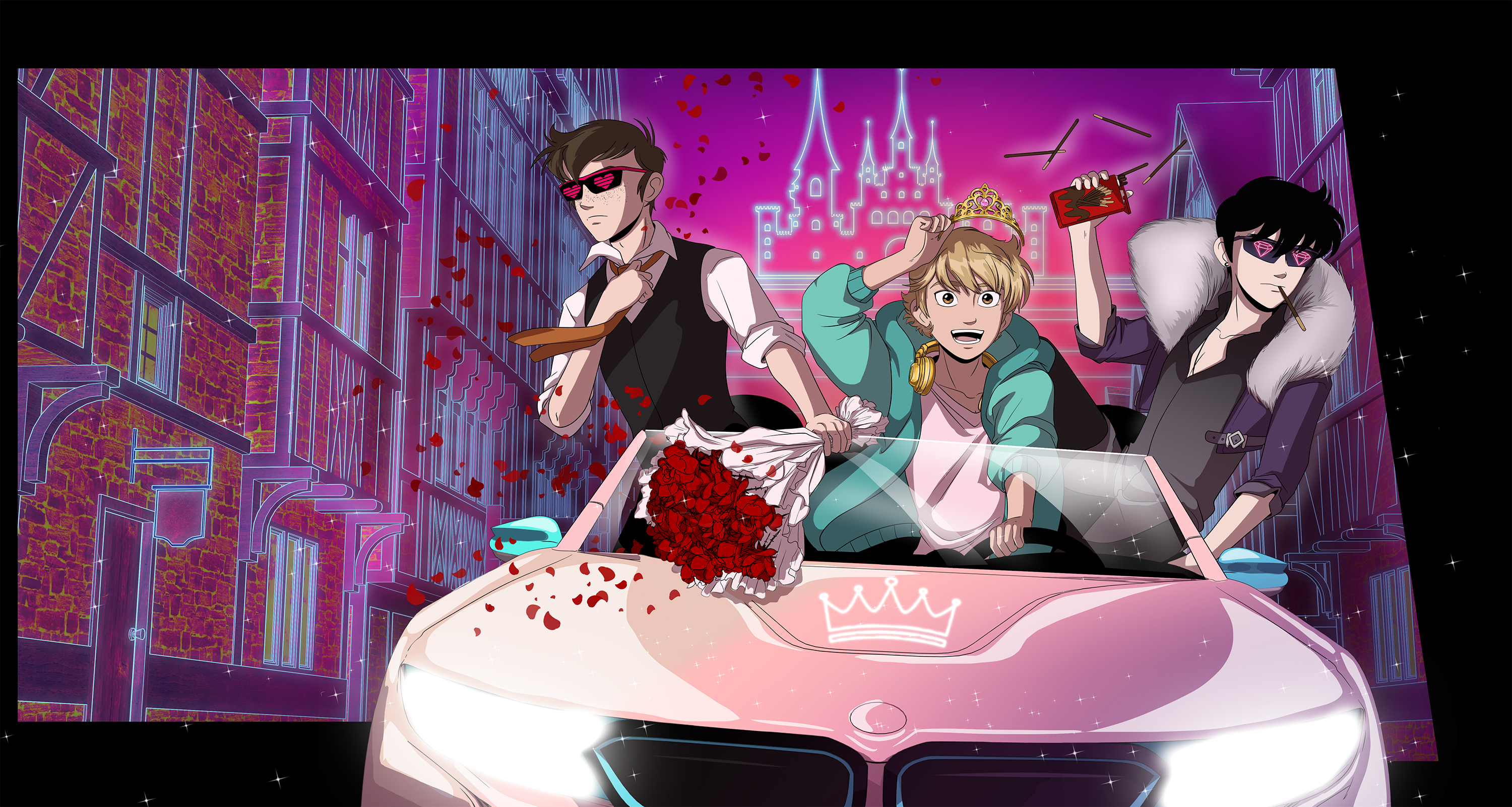
I would love to talk a little bit about Cinderella Boy. We have just come to the conclusion of the second big season. You’ve got another one planned. I would love to hear a little bit about what the process has been in making this work and just how you’ve made it this far in and where you think it’s going next.
It is super fun. It’s probably, I want to say, bar none my favorite project that I’ve worked on in my career. That’s why I was like, “Listen, we’ve got to do season three because I already planned a season three back in 2022.” I like people to think of seasons one and two as the game and season three as the DLC. But it’s not just a cash grab like a lot of DLCs! It’s a good DLC like Little Nightmares. It’s not just like two chapters and that’s it. It’s really good.
The fans have been very excited about it and very enthusiastic. We have a great community. I’m so happy, honestly, that they’re just such good kids. They’re just such good kids, she said with a smile on her face. They’re not toxic. They don’t argue. Even WEBTOON was impressed with how polite they are.
We were doing interviews leading up to New York, but this was a written one. I did an interview and somebody said, “How do you cope with negative or hurtful comments?” And I said, “Easy, I don’t get any.” Easiest cope in the world, I don’t. Because the kids are all so nice and supportive. We just had a hiatus episode come out where some people were like, “I don’t know if I really like this.” And I was like, “Well, let’s talk about it.” And then we talked about it in the comments and they’re like, “What? I can absolutely see the point that other people made. Thanks.” And I was like, “No, thank you.” There’s no fighting or arguing.
That’s probably the best part. That’s the part that makes Cinderella Boy my favorite project. It’s not just having fun drawing, because I’ll have fun drawing, whatever. It’s the people who interact with it that make it fun for me. We love doing little projects together.
Every Christmas, I have the mods in my Patreon Discord to help me do it, they go online and they find hundreds of pictures randomly. Just random pictures, not the most popular ones, just random ones from Pinterest and TikTok and Tumblr and Instagram. They send them to me and they arrange them all in sheets. I print them out at home in just tons and tons of sheets. We cut them out, put them on strings and then I do a giant Christmas scene in my living room. We now have multiple Christmas trees, because it ran out last year. I just put up one tree and was like, “Oh God, we need another tree. We have too many ornaments.”
We decorate the whole room as a Cinderella Boy Christmas. The mantle gets decorated with fanfiction titles. And the fans will sit there and design, not for their own art, not for their own stories, but for other people’s stories. They’ll sit there and do calligraphy and stuff to do the titles for all of them. And they draw little pictures for other people’s fanfics just to go up on the mantle. And it’s so sweet. Now, I take a big video of everything and show everybody.
For season three, I’m very excited, we have a new feature that’s going to tie in with my YouTube channel. It used to stream on Twitch, but now we’re just going to move to YouTube permanently. We’re going to do regular unboxings of fan merch because a lot of kids make really great keychains and everything. So what I do is, I take some of my Patreon money and I buy up all the merch that people make. I buy at least a few things from everybody’s store. And then we unbox it and show the links where people can buy some things.
Oh, that’s awesome.
We already did one and everybody liked it. That’s the community we have. And honestly, that’s the most fun part of doing this series.
It also seems like it’s a very exciting place to be as an artist. Like, for instance, people who potentially work for, like, Disney would not necessarily count on its individual fan works being sold in stores. But this seems like a very fun, engaging, supportive space.
Just backing up a bit, the thing that makes Webtoons really interesting is that it’s originally from Korea, where the model’s a little bit less about how to sell the book up front or how to we sell this other stuff. It’s about building an audience consistently. There’s a coin mechanism to unlock upcoming episodes early is how you build a financial incentive structure, which is different to how we do it stateside in a lot of different ways. It has different incentives. And how has that been, just being able to focus on developing an audience rather than individually monetizing components of it?
I appreciate our model much more. It’s not a model where it’s like, “Do you want to read this series? Pay up front. Here’s half of one episode as a teaser. Pay for the rest.” It’s free if you just want to read a new one every week. You get a new episode for free and you don’t pay anything at all and you can read along with everybody else. But if you want to read ahead, here’s the monetization option. That’s really nice to me because there are a lot of people who will say, You’re not getting paid. How many of your readers are free readers? Oh, that’s a huge percentage. Only a tiny percentage pay.
I’m like, yes, but that doesn’t mean that they’re not supporting other people on Webtoon. And that doesn’t mean that those people don’t have free readers that come and support me. We were talking the other day with someone at Webtoon. We were speaking about introductory series, like series that get you off another platform and into Webtoon’s app because you’re interested in it. Maybe you don’t pay for that specific one, but then you find another series that you do like and you’re like, “Hey, I’d like to support this one.” And that way the series help each other out.
So when people say, Oh, you have all these free readers, I was like, listen, the free readers are the ones doing all the really cool theories and everything. I consider them just as good as the Fast Passers. To me and to all the other Webtoons creators, Fast Passers aren’t “the good ones,” they are equal sides of a scale because Fast Passers help support the series, but free readers are numerous and they support in so many other ways. They do all sorts of arts and stories and their works bring in other people. I see people online who say things like, “I saw your fanfic about Cinderella Boy and I had no idea what it was, but it looked interesting and now I read it.”
And I think this model values that contribution. It’s not just how much can you pay me up front? It’s not a model that says pay this per this, pay this per this, pay this per this. If you’re not paying for it, then what have you done for me lately? Rather, it values contributions that, while it doesn’t have a dollar sign attached to it necessarily, it does promote the entire ecosystem of the app and the whole ecosystem of the series and helps bring in more people who do potentially pay for it.
There’s a lot of intangible value there that you lose if all you do is focus on the price tag attached to every episode.
Yeah, it seems like we’ve had a system in culture, in the United States in particular, for a long time that was very one-directional in that. But recently, particularly around the comics works and stuff like that, you’ve seen this bi-directional where fan labor is valued in its own way, even if it doesn’t directly translate into dollar revenue up front.
It really is. There was this creator, several people sent me a picture that they posted up on Tumblr. And it was this beautiful, just beautiful poster that they did to commemorate season two. It was absolutely gorgeous.It was full of all this iconography and like secret symbols. And I saw it and I said, that’s going to get at least 10 new people to read the series who weren’t reading it before. And if even one of them thinks of Fast Passing, then they’ve paid for the whole thing.
But that is such incredible fan labor, and when you say, oh, well, they read for free, I was like, but they also draw for free, honestly! And they’re putting in the labor for that. They write for free. They draw for free. They talk about it for free. They make TikToks for free. That’s nothing to sneer at. That’s promotion. That’s engagement. And they’re willing to do it on their own time and on their own dime. That, I consider to be more than worth it. And that’s why I say that free readers are so important to me, too.
We had a little thing during the finale of season two where I drew a little angel protecting a person reading, and it said, “Protect our free readers.” And the fans were so good about it because I promised them a reward if they didn’t spoil it for the free readers. And they go around and they’re like, “Everybody, nobody put up a TikTok that spoils this, okay? Keep it under wraps.” A lot of free readers really appreciated that. They said, “I made it all the way to the end and I didn’t see one spoiler.”
That’s incredible. I would love to talk about this all the time. I do know that we have to wrap up soon. The Stagtown film adaptation has been in the works for a little while. Can you say anything?
There’s nothing I can really talk about at the moment that I’m allowed to talk about. I will say that things are progressing well. I’m excited for it. I actually packed up a copy of the books to send off to our director, Ben Brewer, and a couple other people. Get his people to talk to our people so I can send it to him. I’m very excited about it. I think that we’ll have some more news pretty soon. And I’m pretty thrilled.
The apartment complex that I’m going to be moving out of soon, they’re thrilled but cautious. Because apparently, during the pandemic, I based Frankie’s apartment on that complex. Apparently, more than one fan recognized where I lived, because it’s not hard to see if you’ve been there before. They lived in the area. And they said, “Oh, I used to visit some friends who lived there. That’s how I know where you live.” And I was like, “Okay.” They’re like, “That came off really creepy. I’m sorry!”
But the complex now knows that it’s in a book and everything. And they’re just like, “Are we going to have people showing up?” I’m like, “Probably not until the movie. But by then, I’ll be moved. So, like, your problem!” That’s what you get for not mowing the lawn enough.
The only development is the apartment complex is like, “Are they going to come here with cameras or something?” Frankie’s apartment is based on my apartment, because I was stuck inside, so, I used it as reference. I said to Ben, “That’s actually my apartment with all my furniture and everything.” And he said, “Oh, that’s great. We should put that in the movie.” I said, “Wait, you’re actually going to film in my apartment?” And he’s like, “No, no, of course not.” I was like, “Oh, of course. That would be ridiculous.” He’s like, “We’re going to build a set of your apartment.”
Oh, my gosh.
He’s like, “It’s going to be a total head trip. You haven’t lived until you’ve walked onto a movie set, and then there’s your apartment inside it.”
I really, I can’t wait until the movie comes out.
I don’t know how much they’re going to be able to do on location. But most everywhere in Stagtown is a place in Bucks County, Pennsylvania. Like the Buck Hotel that they stay in, that’s a real place with a real big statue. I just drew it. I went there and then stood outside and drew it with the big statue of the deer in front of it. Although it’s not a hotel anymore. It’s now a rental for weddings and everything. It was featured in Stagtown wedding venues. It has featured in everything, like the abandoned farmhouse, that bridge, everything, the tunnel.
Even the underground river, the one that Frankie and Felix got sucked down into in the story? I just got back from Chicago last month from doing research on location for season three of Cinderella Boy. But I looked it up and I was like, “Are there any underground rivers in the U.S. that I can go drive and see?” And they’re like, “There are only two.” One of them is in Arizona. And I was like and the other one is in Hellerton, Pennsylvania. It was 40 minutes and I drove right over there. And they’re like, “Yeah, we give tours, usually only on weekends. But we can give you a personal one.” They led me down into this underground river through these little caverns. Hellerton Caverns has an underground river in it, and what are the odds that there’s one just right here, right where the story is. And I got a hat and everything.
That’s amazing.
It was very, very cool. Excited about the movie. Just can’t talk about anything much right now.
You can, I hope, talk about the new book and where people can find it. And a little of why people should check it out.
If you really want to sit in a nice cozy room with your blanket on your lap and this book on your lap and your legs like slowly falling asleep because the book is on your lap because it’s so big. You can find Stagtown from Penguin Random House absolutely everywhere. Amazon, Barnes & Noble and all that.
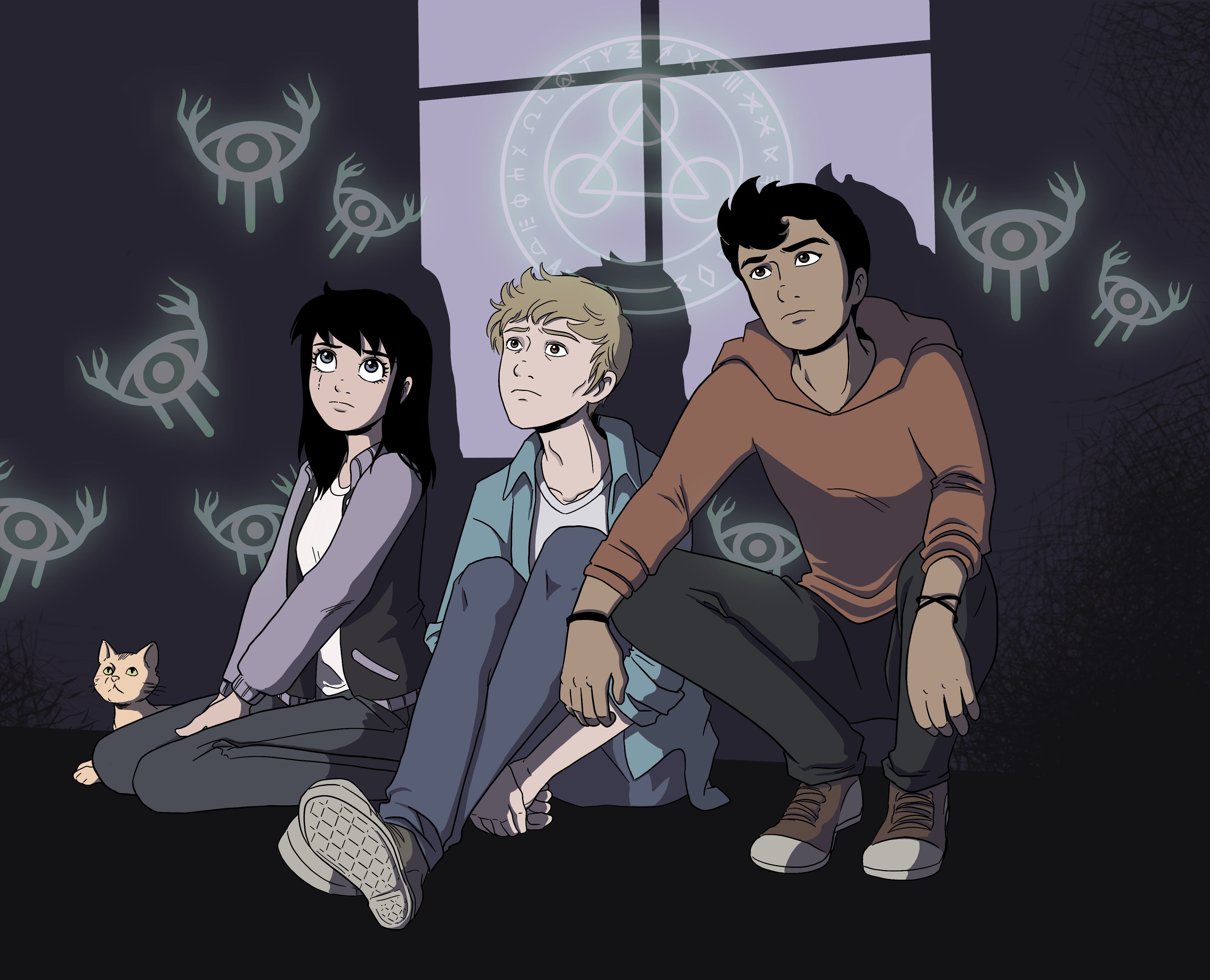
It is a small town horror from the Northeast, set in Pennsylvania. And it stars Frankie Parker, who has just come back from college and moved back to her tiny little hometown of Stagtown only to discover that strange things are happening in the town. And that the town does not wish her, or anybody else, to leave it.
Volume One of Stagtown is available in print, and you can read both Cinderella Boy as well as all of Stagtown right now on WEBTOON.
Edited by Crystal Wang